WAREHOUSE:
MISPLACEMENT
#Collective Show
#Installation
#Performance
WAREHOUSE:
MISPLACEMENT
From the series:
Warehouse
Vacunalia - Se ti perdi m'Incontri, Vacone
Critical text by Niccolò Giacomazzi
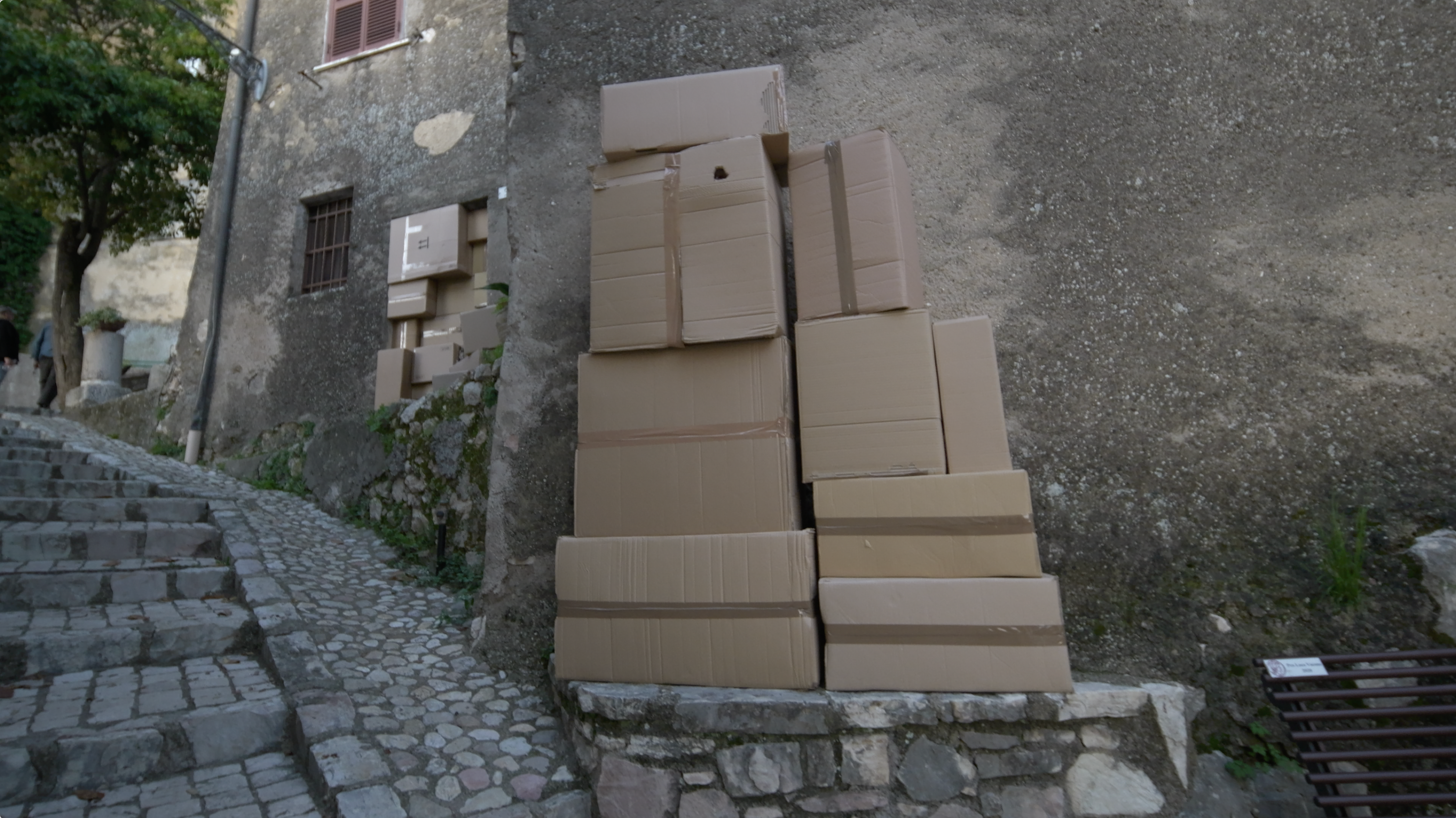
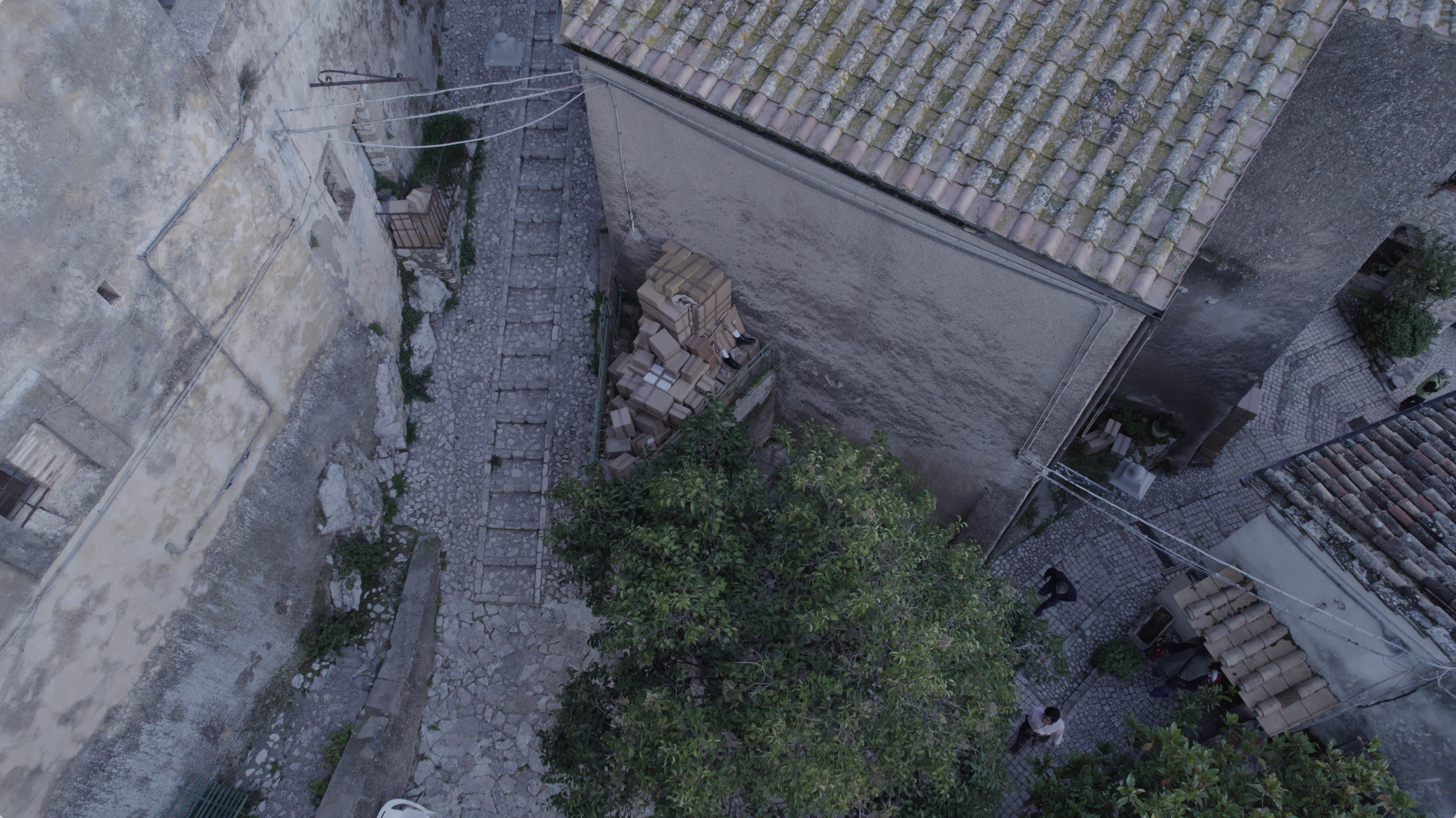
Warehouse: Misplacement presents a monumental structure of cardboard boxes, animated by visceral movements that allude to hidden lives without fixed identities of gender, class,
or origin.
The installative performance stages the scene of a mistaken delivery, a narrative pretext that unravels into an exploration of the complexity of contemporary identities.
The monumental presence of these superstructures resonates with what posthumanist thought identifies as the very means through which existential and spiritual quests are continuously renegotiated.
The figures that emerge are “new,” candid adult presences, suspended in an incomplete process of shipment: metaphors of a condition of existence that is never fully contained nor entirely delivered. At the core of this work lies the collective’s founding spirit, which recognizes how the objectification of experiences and persons—characteristic of capitalist dynamics—is reshaping the way human autonomy is understood. The responsibilities ascribed to the consumer, or the proliferation of “Little helpers” and “Personoids” mediating our daily interactions with services and products, exemplify this shift. Against this backdrop, the collective asserts the urgency of reclaiming the fruits of interpersonal negotiation, subverting traditional concepts of originality, authorship, and competition. Thus, the purpose of involvement becomes a key element: the negotiation of identity and autonomy necessarily unfolds through the expansion of socio-cultural opportunities and the cultivation of active participation. The endurance performance Warehouse: Misplacement bears strong installation traits while foregrounding direct contact with the spectator, who is called upon to penetrate and explore the mysterious structure.
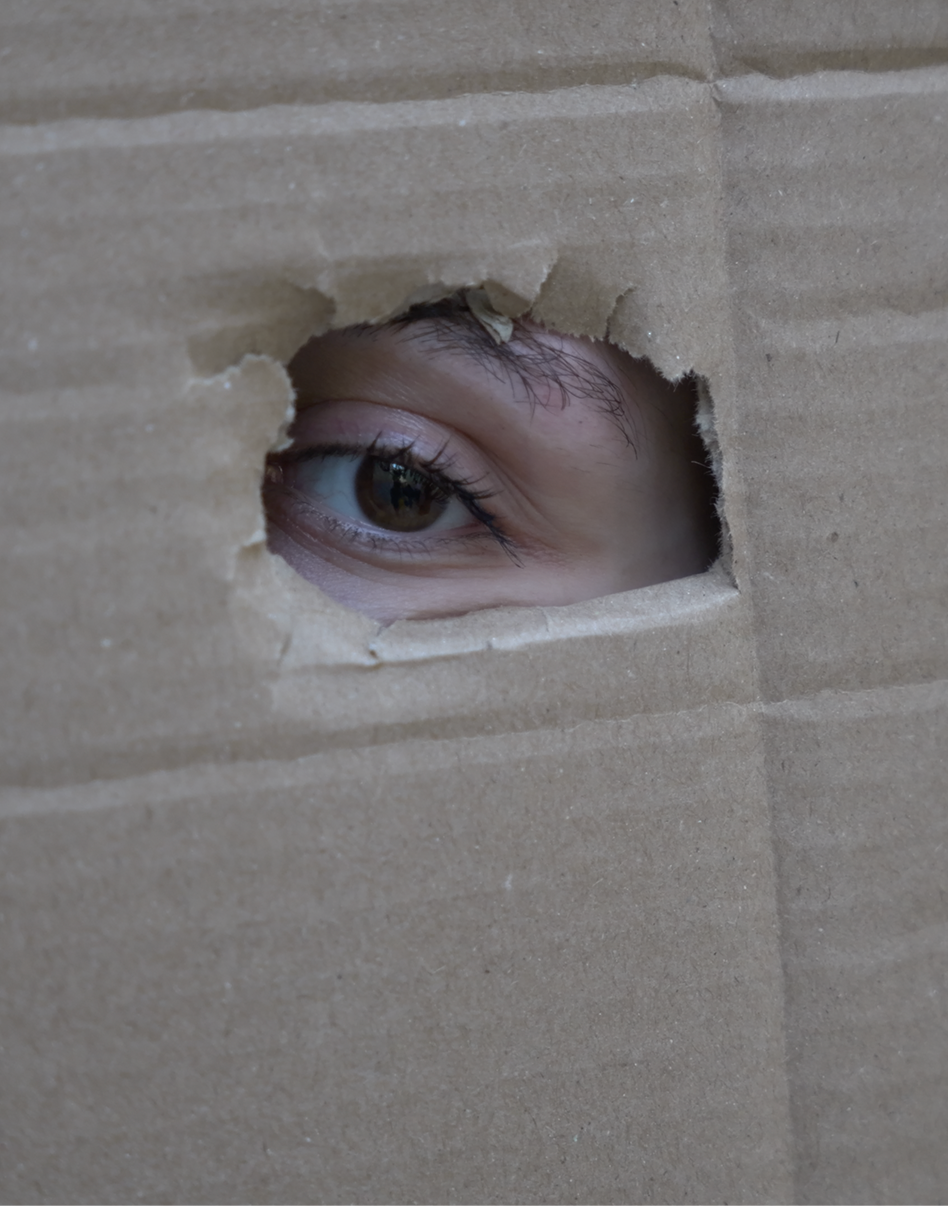
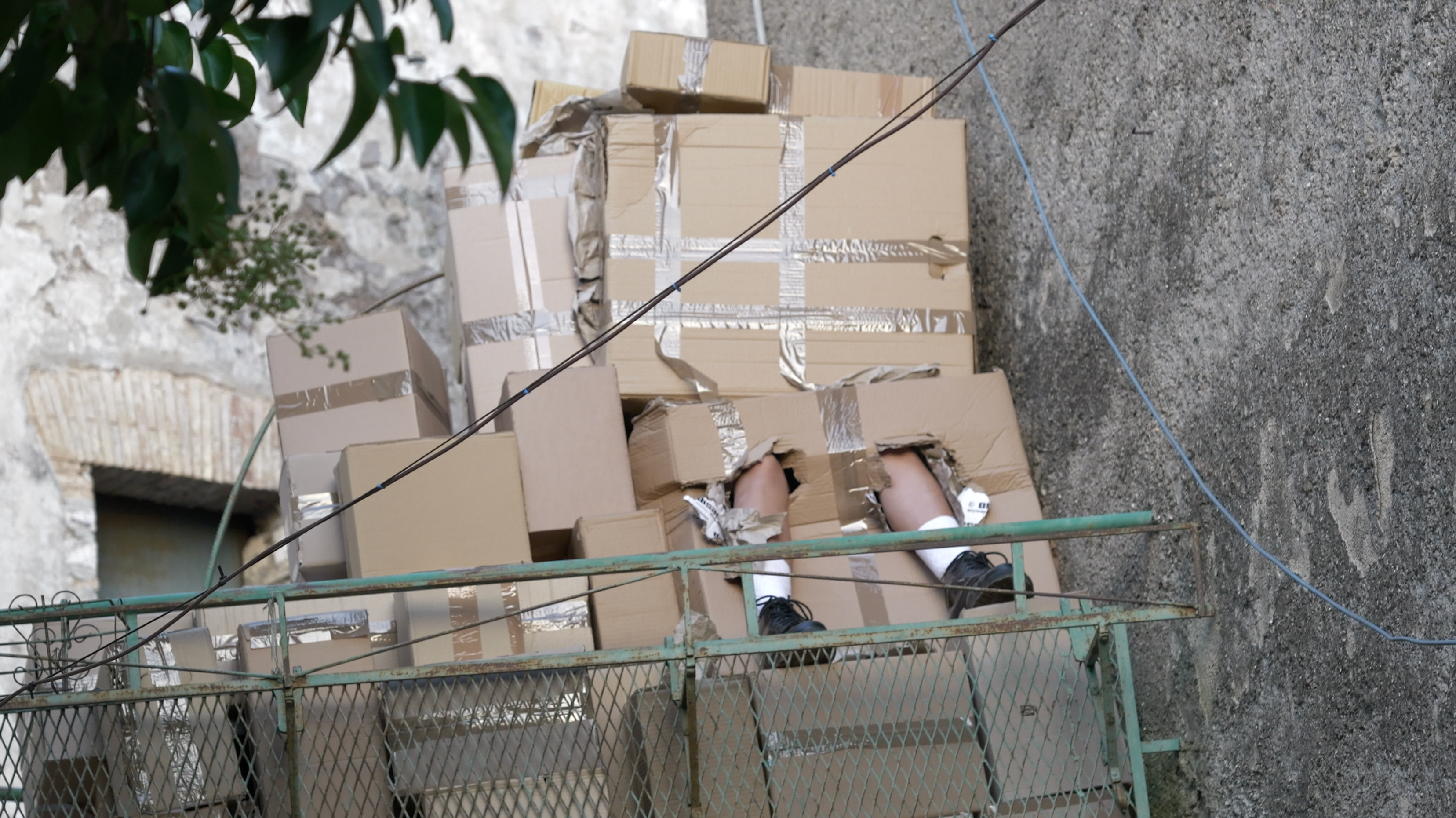
The boxes, through visceral movements, reveal the presence of living beings, yet without ever confirming their belonging to any ethnicity, social class, sexual orientation, or gender identity. They remain containers that merely promise a living presence—two human elements, a pair of legs and a pair of eyes—to be encountered only by those willing to scrutinize the monolith with determination. In this way, the work insists on an existential investigation whose response can only be approached through the lenses of new materialist thought.