WHAT IS FREE
WILL?
From the series:
Everyday We Ask Ourselves Important Questions
Suspicion of a coincidence until proven otherwise.
Critical text by Gemma Gulisano
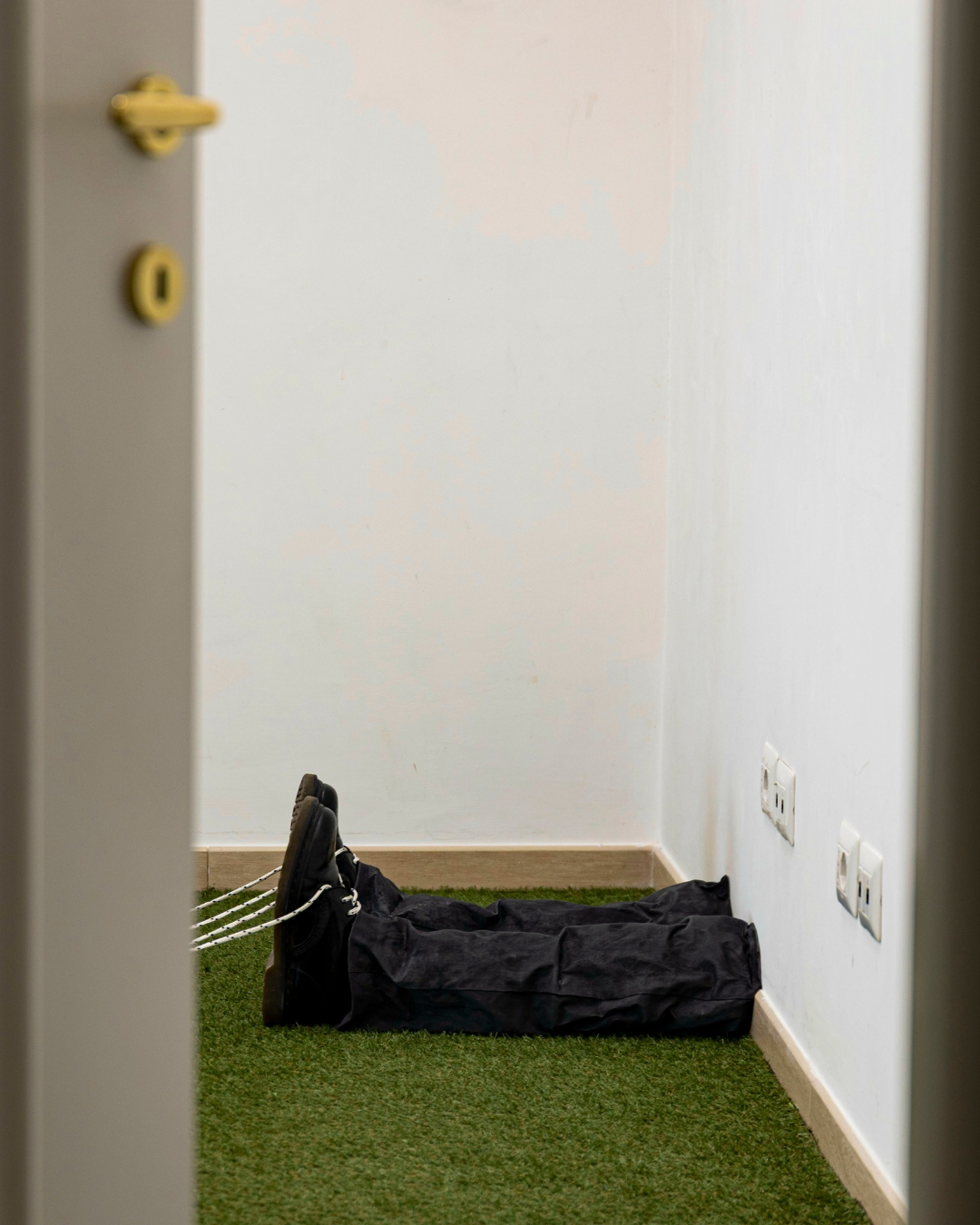
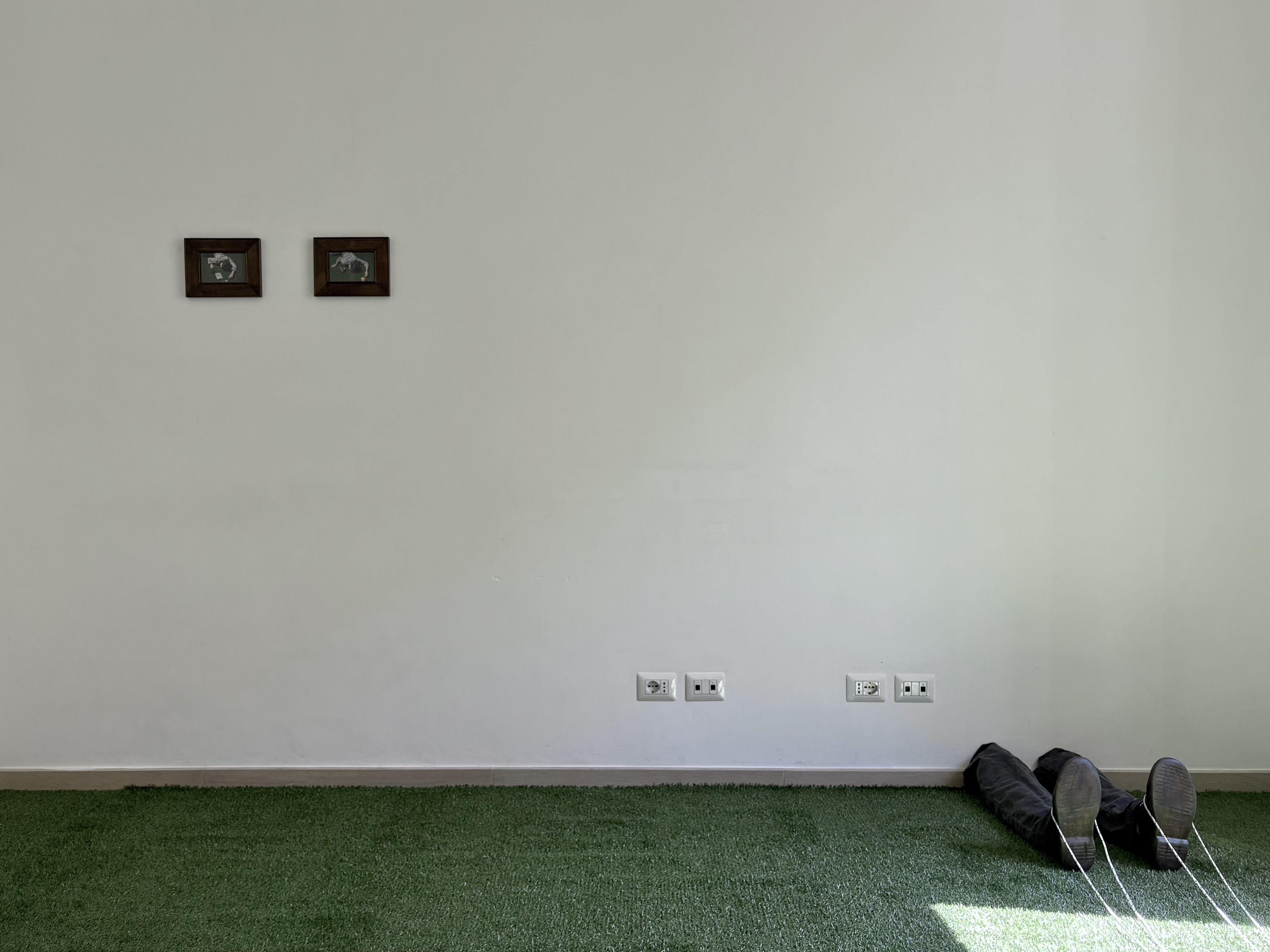
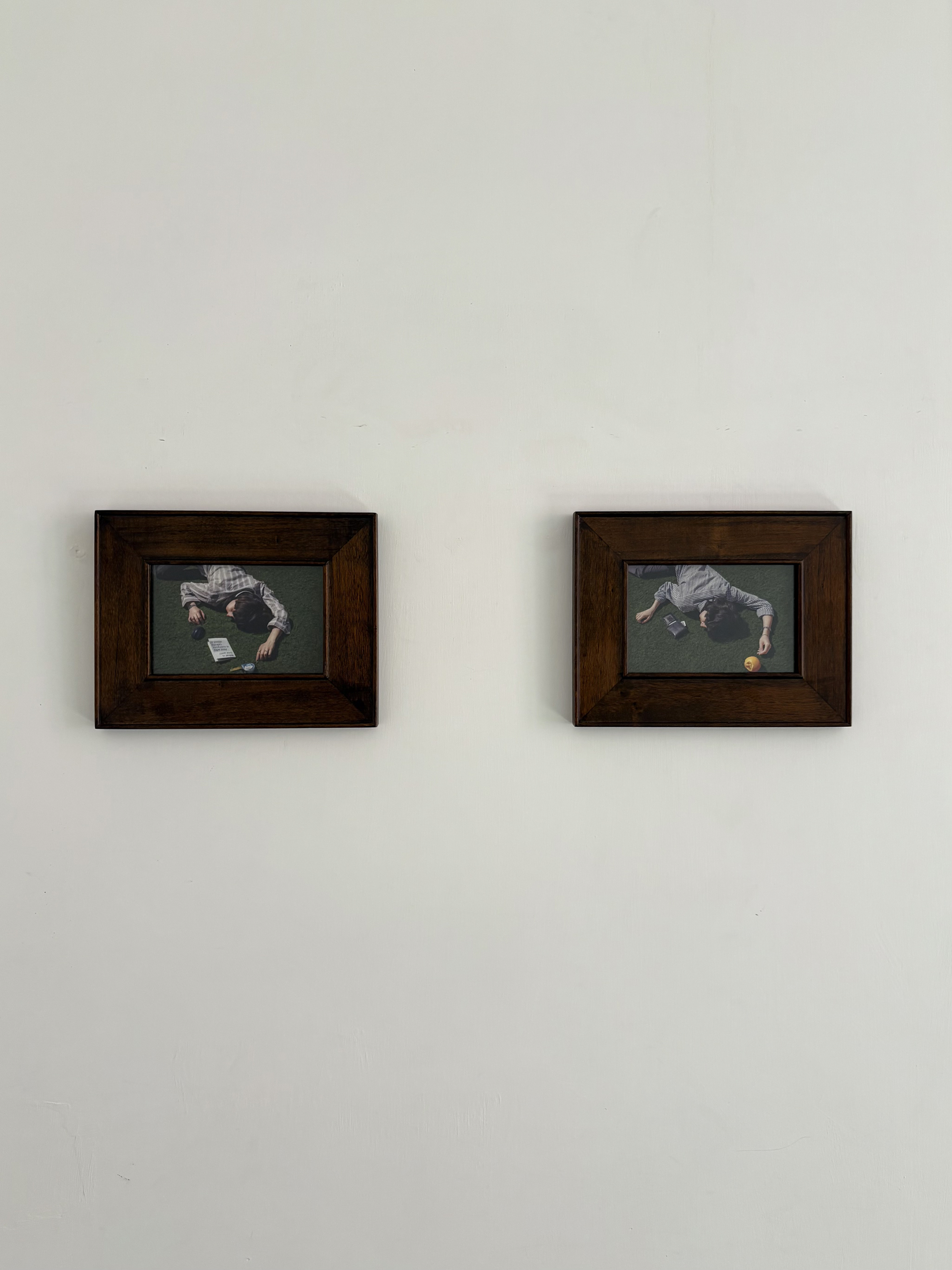
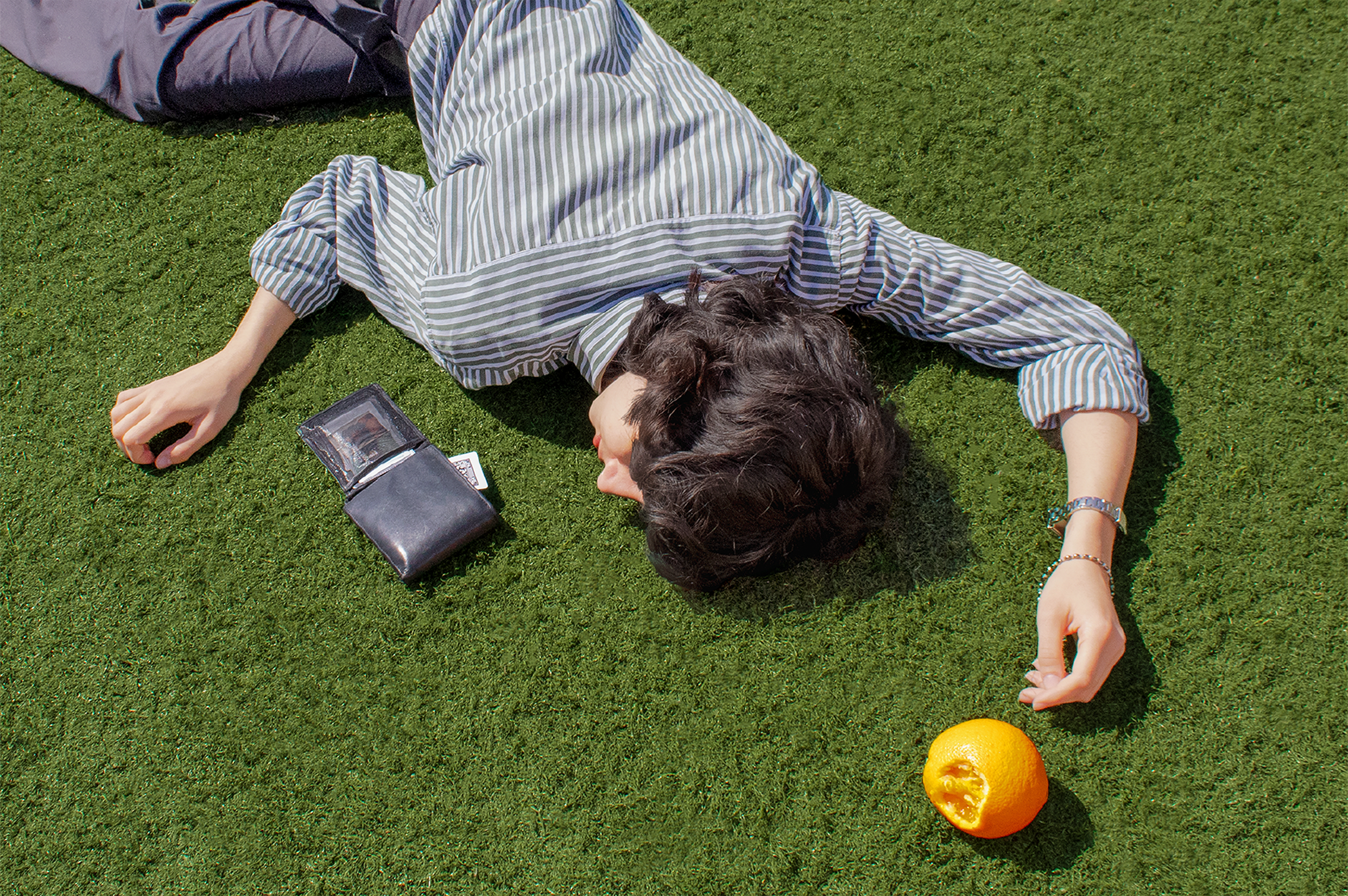
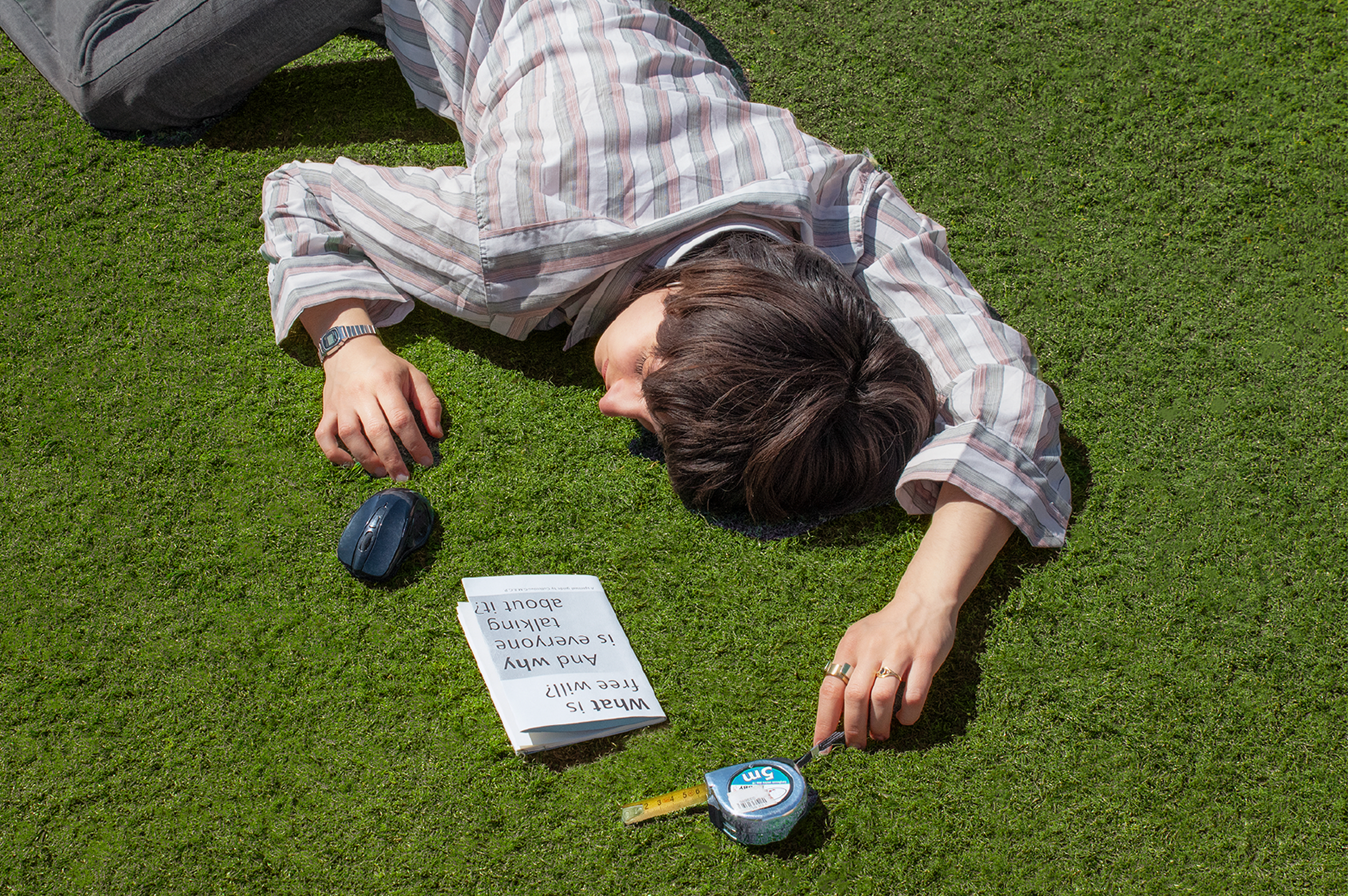
The scattered traces in the space offer visitors the testimony of an alleged occurrence.
Was it chance that triggered the encounter/clash witnessed here? Very little is revealed to the audience: the clues, abandoned on an improbable lawn, might belong to a staged set-up designed to mislead us.
After all, the very existence of every individual cannot escape the deceptions of others — and even less our own self-deceptions.
But what if, contrary to what reason suggests, chance had actually determined the events one experiences in this space? If so, one would have to acknowledge the existence of chance.
Art history contains countless examples of artists allowing chance to shape their works: Duchamp, for instance, embraced chance so deeply that he dubbed himself an “an-artist.” The most famous case is 3 stoppages étalon (1913–1914), an experiment akin to Jean Arp’s 1930s According to the Laws of Chance collages and objects. Others fascinated by randomness include Tristan Tzara, with his poem made from newspaper clippings pulled from a hat; Piero Manzoni, with the kaolin used in his late-1950s Achromes; and Boetti, advocate of order within chaos, inspired by the apparent randomness of stars in the night sky (Agata Boetti, Il gioco dell'arte con mio padre Alighiero, Electa, 2016).
Chance is also the unpredictable — that which escapes the author’s control — and thus inevitably seeps into the happening (Abramović, Rhythm 0, 1974) and, to varying degrees, into performance practice.
If this supposition were valid, the duo’s work would represent a post-event artistic intervention — or rather, what remains of an action that excluded audience involvement until a certain point: the outcome and the aftermath, where what remains are the traces (the post-performance).
Such a conclusion would support a reading of the work that might otherwise falter.
Indeed, chance — as the relinquishing of control over the work — seems to oppose the programmatic nature that has so far defined Collettivo G.M.R.G.P.’s practice. Thus, rather than recognising the intervention of chance as a creative law, it might be better to detect in the work a programmed action that nonetheless may have welcomed unforeseen results.
The estranging, at times surreal, dimension presented here could underscore a declaration of nonsense, raising a tangle of questions without any answers. What emerges is a poetics of the absurd — humor pushed to the point of paradox: the playful sarcasm of Maurizio Cattelan and Pino Pascali; the sophisticated irony of Gino De Dominicis; the contemporary humor of Eva and Franco Mattes.
We are also faced with art that does not necessarily seek to produce effects. And if an artistic subjectivity had among its effects — without entirely meaning to — the production of something capable of wanting? Imagine an artistic process in which, without any particular intention, an artist working on images and ideas makes something emerge that seems to want. At that point, at least in part, they follow that emerging will. They would be neither an involuntary artist nor one driven by a primary, affirmative, authoritarian will. One could think of them as a sort of involuntary inventor of will — someone who now and then extracts, from a multitude of materials and possibilities, a bud of subjectivity that could, latently or by analogy, perceive, act, and want…

Exibart
Roomates atto III, convivere è condividere:
tre mostre allo Spazio Studi Arte
by Davide Fontana
art a part of cult(ure)
Roomates - Atto III:
riti, gesti e visioni in un appartamento condiviso.
by Beatrice Andreani